

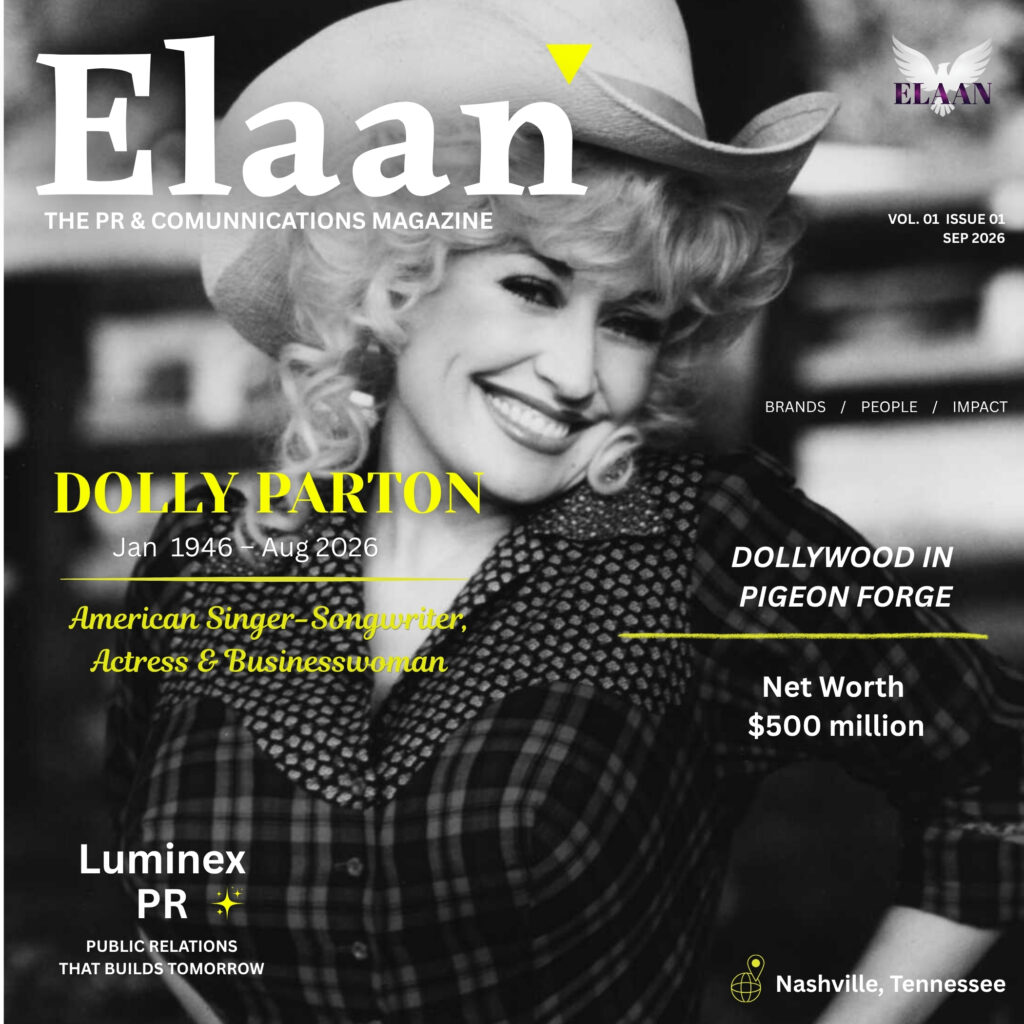
Dolly Rebecca Parton was born on January 19, 1946, in a one-room cabin in Locust Ridge, Tennessee. She was the fourth of twelve children born into a poor, musical family in the Great Smoky Mountains, an upbringing that would later inspire her legendary songwriting.
The 1950s were a decade of firsts for Dolly Parton. Even at a young age, she was performing on local radio and television programs, recorded her first single, “Puppy Love,” and made her debut at the Grand Ole Opry. Her passion for songwriting began during these formative years and would go on to shape one of the most celebrated careers in music history.
In the 1960s, Dolly Parton laid the groundwork for her legendary career. After moving to Nashville in 1964, she quickly earned recognition as a gifted songwriter with hits like “Put It Off Until Tomorrow” before joining The Porter Wagoner Show in 1967, which introduced her to millions. In that same year, her debut album Hello, I’m Dolly showcased her blend of mountain roots, sharp wit and undeniable charisma, marking the rise of one of country music’s brightest new stars.
The 1970s were a defining decade for Dolly Parton as she stepped into her own spotlight. After parting with Porter Wagoner in 1974, she quickly proved her star power, earning CMA Female Vocalist of the Year honors in 1975 and 1976 and Entertainer of the Year in 1978. Balancing newfound independence and business challenges, she launched her own TV show Dolly in 1976 and achieved crossover success with “Here You Come Again,” solidifying her place as both a country and pop icon.
The 1980s solidified Dolly Parton as a global icon whose talent transcended country music. She conquered Hollywood with 9 to 5, earning chart-topping success and award nominations, followed by hits like “Islands in the Stream” with Kenny Rogers. Beyond music and film, she opened Dollywood in 1986, celebrated her roots with the Trio album and shined in Steel Magnolias, proving she was not just a star, but a powerhouse of music, film and philanthropy.
The 1990s marked a decade of creativity and compassion for Dolly Parton as she expanded into philanthropy, television and collaboration. She launched the Imagination Library, released acclaimed albums like Eagle When She Flies and reunited with icons Tammy Wynette and Loretta Lynn for Honky Tonk Angels. Capping a decade of artistic range and generosity, Dolly was inducted into the Country Music Hall of Fame in 1999, honoring her enduring impact on music and beyond
In the 2000s, Dolly Parton blended her roots with fresh creativity, returning to bluegrass and country on albums like Little Sparrow and For God and Country. She earned top honors, including induction into the Songwriters Hall of Fame, GRAMMYS for “Shine” and a No. 1 duet with Brad Paisley, “When I Get Where I’m Going.” Through sold-out tours and new media ventures, she proved her artistry and influence remained as.
From 2020 to today, Dolly Parton has continued to expand her legacy through music, philanthropy and creativity. She donated $1 million to COVID-19 vaccine research, released bestselling books and was inducted into the Rock & Roll Hall of Fame. With her 2023 Rockstar album, certified gold, the album brought Dolly the biggest-selling first-week sales of her 7-decade career. From her viral halftime performance to new ventures in food, theater and literacy, Dolly continues to inspire the world with her boundless energy, generosity and artistry. Simply put, Dolly is more popular now than ever before!
Parton is one of the most-honored female country performers in history. The Record Industry Association of America certified 25 of her single or album releases as Gold, Platinum, or Multi-Platinum. She had 26 songs reach No. 1 on the Billboard country charts, a record for a female artist. She had 42 career Top 10 country albums, a record for any artist, and 110 career-charted singles over the past forty years.
As of 2012, she had written more than 3,000 songs and sold more than a hundred million records, making her one of the best-selling female artists ever.
As of 2021, she had appeared on the country music charts in each of seven decades, the most of any artist. Parton earned 11 Grammy Awards (including her 2011 Lifetime Achievement Grammy) and received 55 Grammy nominations, the third-most nominations of any female artist.
Parton was hospitalized at Vanderbilt-Ingram Cancer Center in Nashville, Tennessee, on August 21, 2026, and died after a “brief battle” with cancer on August 25, at age 80. Her death was announced the same day by her nephew, Bryan Seaver, who had served as her head of security for more than two decades. Parton had asked him several years prior to make the announcement of her death, which he described as “an honor that is mixed with absolute pride and great sadness”.
A small, private funeral was held for Parton’s immediate family, at her request, on August 28. She was entombed next to her husband in the mausoleum at Woodlawn Memorial Park in Nashville.